NOTIFICATIONSANNOUNCEMENTS ➔➔
➔➔
CONTACT
Click on the Arrows to Go Up or Go Down.
Click Again to Pause Anywhere.
Double Click to Go Non-Stop.
1 / 1

Problem: the Product may Exist, but the Market may not Want it Strongly Enough or may not Understand why it is Better.
Root Cause: Weak Customer Research, Unclear Positioning, and Poor Differentiation.
Strategic Response: Validate Demand, Define a Sharp Value Proposition, and Position the Product around a Real Customer Need.
KPIs: Repeat Purchase Rate, Conversion Rate, Customer Feedback Score, Market Penetration, Return Rate.
0–12 Months: Research Customer Needs and Test Product Assumptions
1–3 Years: Refine Positioning and Strengthen Product-Market Fit
3–10 Years: Build a Category-Leading Product Brand

Problem: Poor Product Quality Damages Trust, Increases Complaints, and Reduces Long-Term Growth.
Root Cause: Weak Design Standards, Poor Raw Materials, Inconsistent Manufacturing, or Inadequate Testing.
Strategic Response: Build Strict Quality Systems across Design, Production, and Post-Sale Monitoring.
KPIs: Defect Rate, Warranty Claims, Return Rate, Customer Satisfaction, Product Failure Incidents.
0–12 Months: Quality Audit and Defect Identification
1–3 Years: Standardize Production and Quality Checks
3–10 Years: Establish Premium Reliability Reputation

Problem: Prices may be Too Low to Sustain the Business or Too High for Market Acceptance.
Root Cause: Weak Cost Control, Poor Pricing Logic, or Lack of Value-Based Pricing Discipline.
Strategic Response: Build Pricing based on Value, Competition, Cost, and Margin Objectives.
KPIs: Gross Margin, Net Margin, Price Realization, Discount Dependence, Profitability by SKU.
0–12 Months: Review Costs and Pricing Structure
1–3 Years: Optimize Product Mix and Margins
3–10 Years: Mature Pricing Architecture with Strong Profitability

Problem: Delays, Stockouts, Overstocking, and Supply Disruption can Destroy Growth and Cash Flow.
Root Cause: Weak Forecasting, Supplier Dependence, Poor Logistics, and Limited Inventory Discipline.
Strategic Response: Create Resilient Sourcing, Forecasting, Inventory Control, and Distribution Systems.
KPIs: Inventory Turnover, Stockout Rate, On-Time Delivery, Supplier Reliability, Working Capital Cycle.
0–12 Months: Supply Chain Assessment and Inventory Cleanup
1–3 Years: Strengthen Forecasting and Supplier Network
3–10 Years: Build Resilient, Scalable Supply Systems

Problem: a Good Product may Fail if Customers cannot Access it Easily.
Root Cause: Weak Channel Selection, Poor Retailer/Distributor Management, or Limited Direct Access.
Strategic Response: Choose the Right Mix of Direct Sales, Retail, Marketplace, Wholesale, and Partner Channels.
KPIs: Channel Revenue, Distribution Coverage, Sell-Through Rate, Channel Profitability, Geographic Reach.
0–12 Months: Identify Best-Fit Channels
1–3 Years: Expand High-Performing Channels
3–10 Years: Build a Diversified, Resilient Distribution Network

Problem: the Product may be Strong, but Weak Presentation Reduces Buyer Interest.
Root Cause: Poor Packaging Design, Unclear Labeling, Weak Branding, or Low Visual Appeal.
Strategic Response: Design Packaging and Presentation to Improve Trust, Clarity, and Purchase Conversion.
KPIs: Shelf Conversion, Packaging Feedback, Brand Recall, Retail Pickup Rate, Visual Engagement.
0–12 Months: Redesign Packaging and Product Presentation
1–3 Years: Strengthen Brand Consistency across all Touchpoints
3–10 Years: Build Iconic Product Recognition

Problem: a Company may Get the First Sale but Fail to Create Repeat Customers.
Root Cause: Weak Support Systems, Slow Complaint Handling, and no Retention Strategy.
Strategic Response: Build Strong After-Sales Support, Replacement Systems, and Loyalty Mechanisms.
KPIs: Repeat Purchase Rate, Complaint Resolution Time, Customer Lifetime Value, Referral Rate, Churn Rate.
0–12 Months: Create Support and Complaint Systems
1–3 Years: Build Loyalty and Repeat Sales Programs
3–10 Years: Develop High-Retention Customer Base

Problem: Manual Systems Limit Speed, Visibility, and Scale.
Root Cause: Low Digital Adoption, Poor Data Systems, and Fragmented Operations.
Strategic Response: Automate Core Functions such as Sales, Inventory, Production Planning, and Reporting.
KPIs: Process Time Reduction, Automation Coverage, Forecast Accuracy, Reporting Accuracy, Cost Savings.
0–12 Months: Digitize Critical Workflows
1–3 Years: Expand Automation and Dashboards
3–10 Years: Build Intelligent, Connected Operations

Problem: without Trust, even a Strong Product Struggles to Scale.
Root Cause: Inconsistent Communication, Weak Reputation, and Lack of Emotional Connection.
Strategic Response: Build a Durable Brand around Quality, Reliability, and Customer Value.
KPIs: Brand Awareness, Brand Preference, Customer Trust Score, Media Sentiment, Referral Strength.
0–12 Months: Clarify Brand Promise
1–3 Years: Build Market Presence and Consistency
3–10 Years: Establish Premium or Category Authority

Problem: Many Product Businesses Remain Small because they cannot Scale beyond a Local or Limited Market.
Root Cause: Weak Systems, Poor Capital Planning, and Overdependence on one Product or one Market.
Strategic Response: Scale through Product Line Expansion, Geography, Partnerships, and Operational Systems.
KPIs: Revenue Growth, Market Expansion, New Product Success, Operational Efficiency, Unit Economics.
0–12 Months: Identify Scalable Products and Markets
1–3 Years: Expand Capacity and Distribution
3–10 Years: Build a Multi-Market, Multi-Product Enterprise

Problem: the Market may not Clearly Understand what the Company is Best at.
Root Cause: Broad Messaging, Weak Specialization, and Unclear Differentiation.
Strategic Response: Position the Company around a Sharp Service Niche, Expertise, and Client Outcome.
KPIs: Lead Quality, Proposal Win Rate, Brand Clarity, Referral Rate, Client Fit Score.
0–12 Months: Define the Core Service Promise
1–3 Years: Strengthen Niche Authority
3–10 Years: Become a Trusted Category Leader

Problem: Service Companies Often Rely on Inconsistent Referrals or Scattered Outreach.
Root Cause: no Structured Sales System, Weak Content, or Poor Prospect Targeting.
Strategic Response: Build a Repeatable Lead Generation and Conversion Funnel.
KPIs: Lead Volume, Conversion Rate, Sales Cycle Length, Cost per Lead, Booked Calls.
0–12 Months: Build a Basic Funnel and Outreach System
1–3 Years: Optimize Conversion and Channel Mix
3–10 Years: Create a Predictable Client Acquisition Engine

Problem: Service Businesses Depend Heavily on Trust, and Trust can be Lost Quickly.
Root Cause: Inconsistent Communication, Weak Follow-Up, or Poor Expectation Setting.
Strategic Response: Create a Trust-First Operating Model with Clear Communication and Accountability.
KPIs: Retention Rate, Client Satisfaction Score, Referral Rate, Complaint Rate, Renewal Rate.
0–12 Months: Standardize Client Communication
1–3 Years: Strengthen Account Management
3–10 Years: Build Long-Term Client Partnerships

Problem: Quality Varies when Service Delivery Depends Too Much on Individuals.
Root Cause: Lack of Process, Weak Training, and no Service Standards.
Strategic Response: Convert Service Delivery into a Repeatable System with Defined Standards.
KPIs: Delivery Time, Error Rate, Client Satisfaction, Service Consistency Score, Rework Rate.
0–12 Months: Document Service Standards
1–3 Years: Train Teams and Measure Delivery Quality
3–10 Years: Build a Scalable Service Engine

Problem: Service Companies Often Underprice, Overcustomize, or Struggle with Revenue Predictability.
Root Cause: Weak Pricing Confidence, Poor Value Communication, and no Structured Packages.
Strategic Response: Package Services into Clear Offers with Recurring or Milestone-Based Pricing.
KPIs: Revenue Predictability, Average Contract Value, Margin, Renewal Rate, Discount Frequency.
0–12 Months: Redesign Pricing and Packages
1–3 Years: Shift to Retainers or Recurring Revenue
3–10 Years: Build Stable, Premium Pricing Power

Problem: Service Quality Depends Directly on People, and Weak Teams Weaken the Business.
Root Cause: Poor Hiring, Weak Training, and Lack of Role Clarity.
Strategic Response: Recruit, Train, and Retain People who Deliver with Skill, Discipline, and Judgment.
KPIs: Employee Performance, Retention, Client Feedback on Staff, Training Completion, Utilization Rate.
0–12 Months: Build Role Definitions and Hiring Standards
1–3 Years: Improve Training and Leadership Depth
3–10 Years: Develop a High-Performance Expert Culture

Problem: Service Businesses Often Lose Time and Money through Unstructured Execution.
Root Cause: no Standard Workflows, Unclear Handoffs, and Manual Coordination.
Strategic Response: Build Operational Systems that Make Delivery Faster, Smoother, and More Reliable.
KPIs: Turnaround Time, Utilization Rate, Project Completion Rate, Overhead Ratio, Rework Rate.
0–12 Months: Map Workflows and Identify Bottlenecks
1–3 Years: Standardize Operations and Automate Coordination
3–10 Years: Build a Scalable Service Operations Model
Problem: Poor Technology can Make Service Slow, Confusing, and Inefficient.
Root Cause: Outdated Tools, Weak CRM Usage, and Poor Digital Support Systems.
Strategic Response: Use Technology to Improve Communication, Tracking, Collaboration, and Client Convenience.
KPIs: Response Time, System Adoption, Client Portal Usage, Reporting Accuracy, Automation Rate.
0–12 Months: Deploy Essential Client and Team Tools
1–3 Years: Integrate CRM and Workflow Automation
3–10 Years: Build a Digitally Enabled Service Ecosystem

Problem: Clients Often Choose Service Companies based on Trust and Perceived Authority.
Root Cause: Low Visibility, Weak Content, and no Public Proof of Expertise.
Strategic Response: Build Authority through Content, Case Studies, Testimonials, and Visible Results.
KPIs: Inbound Leads, Content Engagement, Testimonial Volume, Reputation Score, Referral Growth.
0–12 Months: Publish Proof and Expertise Content
1–3 Years: Build Authority Assets and Market Presence
3–10 Years: Become a Recognized Expert Brand
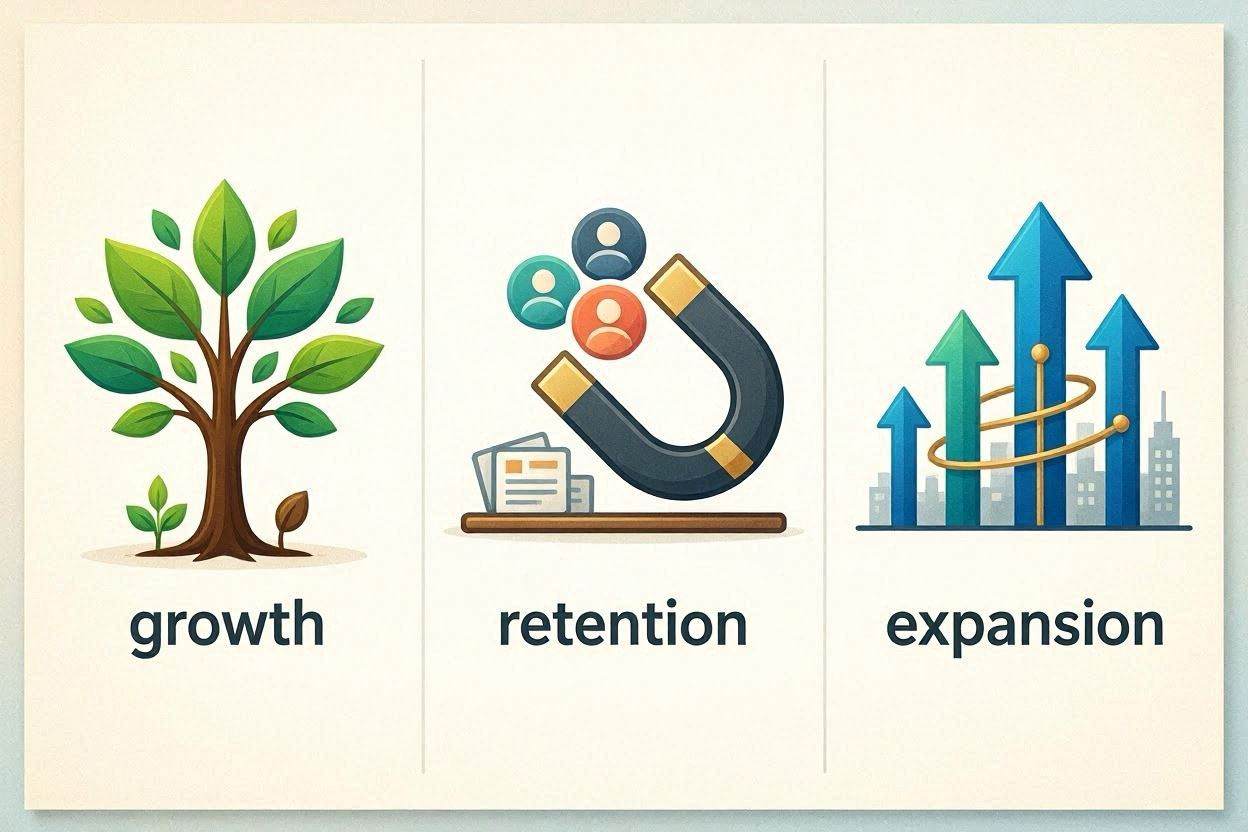
Problem: Service Companies may Grow Initially but Struggle to Scale without Losing Quality.
Root Cause: Founder Dependence, Inconsistent Delivery, and no Scalable Model.
Strategic Response: Build Systems for Repeatable Service, Recurring Revenue, and Expansion into Adjacent Markets.
KPIs: Revenue Growth, Client Retention, Cross-Sell Rate, Expansion Success, Profitability.
0–12 Months: Stabilize Core Service Delivery
1–3 Years: Add Recurring Revenue and Expansion Paths
3–10 Years: Build a Multi-Service, Scalable Firm
A. Diagnose
Find the Real Business Problem, not the Symptom.
B. Design
Create Offer, Process, Pricing, and Growth Strategy.
C. Deploy
Execute through Systems, People, Tools, and Channels.
D. Measure
Track Outcomes using Dashboards, Client Data, and Financial Metrics.
E. Improve
Refine Continuously based on Performance, Feedback, and Market Change.
Phase 1: Trust and Fit
Market Fit, Positioning, Quality, and Customer Understanding
Phase 2: Delivery and Profitability
Operations, Pricing, Sales, and Service Reliability
Phase 3: Scale and Repeatability
Systems, Technology, Talent, and Expansion
Phase 4: Legacy and Leadership
Brand Authority, Resilience, Innovation, and Market Dominance