NOTIFICATIONSANNOUNCEMENTS ➔➔
➔➔
CONTACT
Click on the Arrows to Go Up or Go Down.
Click Again to Pause Anywhere.
Double Click to Go Non-Stop.
1 / 1

Problem: Rivalries between nations, border disputes, proxy wars, and strategic competition destabilize regions and global systems.
Root Cause: Power imbalance, historical grievances, weak diplomacy, resource competition, and security fears.
Strategic Response: Build stronger conflict prevention, diplomacy, multilateral cooperation, and peace infrastructure.
KPIs: Conflict incidents, ceasefire durability, diplomatic engagement rate, civilian casualty reduction, regional stability index.
0–12 Months: Conflict mapping, crisis containment, mediation channels
1–3 Years: Peace frameworks, trust-building, regional cooperation
3–10 Years: Durable international security architecture

Problem: Global growth is uneven, with some regions advancing rapidly while others stagnate or decline.
Root Cause: Debt burdens, inflation shocks, fragile supply chains, trade concentration, and unequal capital access.
Strategic Response: Promote balanced development, diversified trade, resilient industry, and inclusive economic systems.
KPIs: GDP stability, inflation control, debt sustainability, employment growth, trade diversification.
0–12 Months: Economic shock assessment and stabilization measures
1–3 Years: Industrial diversification and investment expansion
3–10 Years: Broad-based prosperity and structural resilience

Problem: Rising temperatures, pollution, deforestation, and ecological damage threaten long-term survival.
Root Cause: Fossil fuel dependence, overconsumption, weak regulation, and unsustainable production models.
Strategic Response: Transition to low-carbon growth, conservation, clean energy, and regenerative development.
KPIs: Emissions reduction, renewable energy share, air and water quality, forest cover, disaster loss reduction.
0–12 Months: Environmental risk audits and pollution controls
1–3 Years: Clean energy adoption and resilience planning
3–10 Years: Low-carbon global systems and ecological restoration
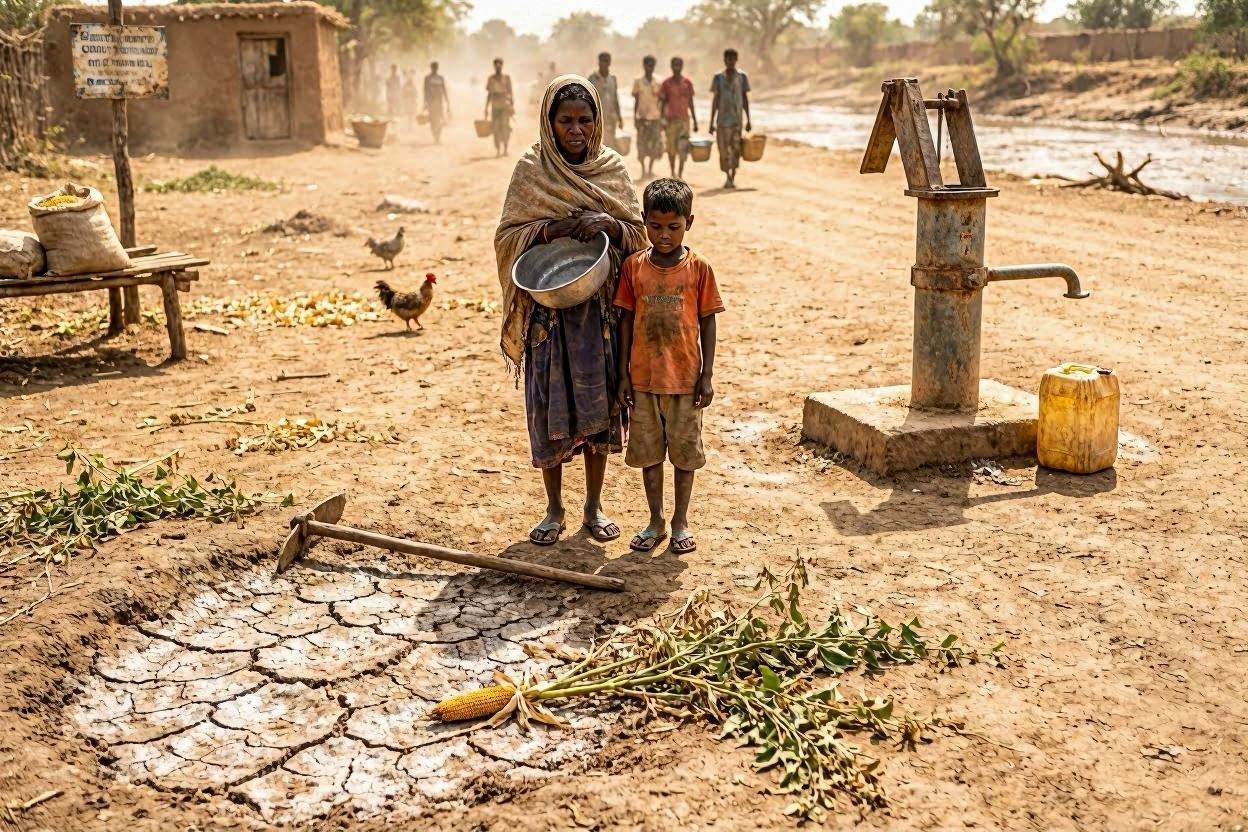
Problem: Millions face unreliable access to food and safe water due to climate, conflict, poverty, and weak infrastructure.
Root Cause: Supply chain disruption, agricultural fragility, poor storage, water mismanagement, and unequal access.
Strategic Response: Build resilient agriculture, efficient logistics, water security, and nutrition systems.
KPIs: Hunger rate, malnutrition rate, water access coverage, food waste reduction, crop resilience index.
0–12 Months: Emergency relief, supply mapping, water access interventions
1–3 Years: Storage, irrigation, logistics, and agricultural upgrading
3–10 Years: Sustainable food and water security ecosystems

Problem: Disease outbreaks, weak health systems, and mental health burdens threaten human and economic stability.
Root Cause: Underfunded healthcare, poor prevention, unequal access, weak surveillance, and global mobility of pathogens.
Strategic Response: Strengthen primary care, early detection, public health infrastructure, and universal prevention.
KPIs: Life expectancy, mortality rates, vaccination coverage, screening coverage, outbreak response time.
0–12 Months: Health risk mapping and emergency readiness
1–3 Years: Primary care scaling and digital health systems
3–10 Years: Resilient public health networks and universal preventive care

Problem: AI, automation, cyberattacks, misinformation, and digital dependency are reshaping societies faster than governance can respond.
Root Cause: Rapid innovation, weak regulation, low digital literacy, platform incentives, and security gaps.
Strategic Response: Human-centered technology governance, cybersecurity, digital literacy, and ethical deployment.
KPIs: Cyber incident reduction, digital literacy rate, safe AI adoption, misinformation reduction, privacy compliance.
0–12 Months: Awareness, protection, and policy baseline
1–3 Years: Workforce reskilling and digital governance
3–10 Years: Trusted, ethical, and resilient technology ecosystems

Problem: Forced displacement caused by war, poverty, and climate pressure strains nations and humanitarian systems.
Root Cause: Conflict, economic collapse, environmental stress, political instability, and weak local opportunity.
Strategic Response: Strengthen humanitarian response, integration systems, local development, and legal pathways.
KPIs: Displacement numbers, asylum processing time, integration success rate, shelter access, employment outcomes.
0–12 Months: Emergency shelter and humanitarian support
1–3 Years: Integration, education, and livelihood systems
3–10 Years: Managed mobility and regional resilience

Problem: Corruption, poor service delivery, weak justice systems, and low accountability undermine trust and performance.
Root Cause: Concentrated power, weak oversight, political capture, opaque systems, and poor civic ethics.
Strategic Response: Build transparent, accountable, performance-driven, and citizen-responsive institutions.
KPIs: Corruption reduction, service delivery speed, audit compliance, trust levels, complaint resolution rate.
0–12 Months: Transparency reforms and process digitization
1–3 Years: Accountability mechanisms and institutional strengthening
3–10 Years: High-trust governance culture and performance-led public service

Problem: Societies are becoming more fragmented by ideology, religion, ethnicity, class, and online polarization.
Root Cause: Inequality, identity politics, misinformation, weak community structures, and loss of shared values.
Strategic Response: Rebuild social cohesion, civic trust, mutual respect, and shared purpose.
KPIs: Trust surveys, violence reduction, community participation, hate-content reduction, mental well-being indicators.
0–12 Months: Dialogue and cohesion programs
1–3 Years: Civic education and social healing initiatives
3–10 Years: Stronger culture of belonging and shared identity
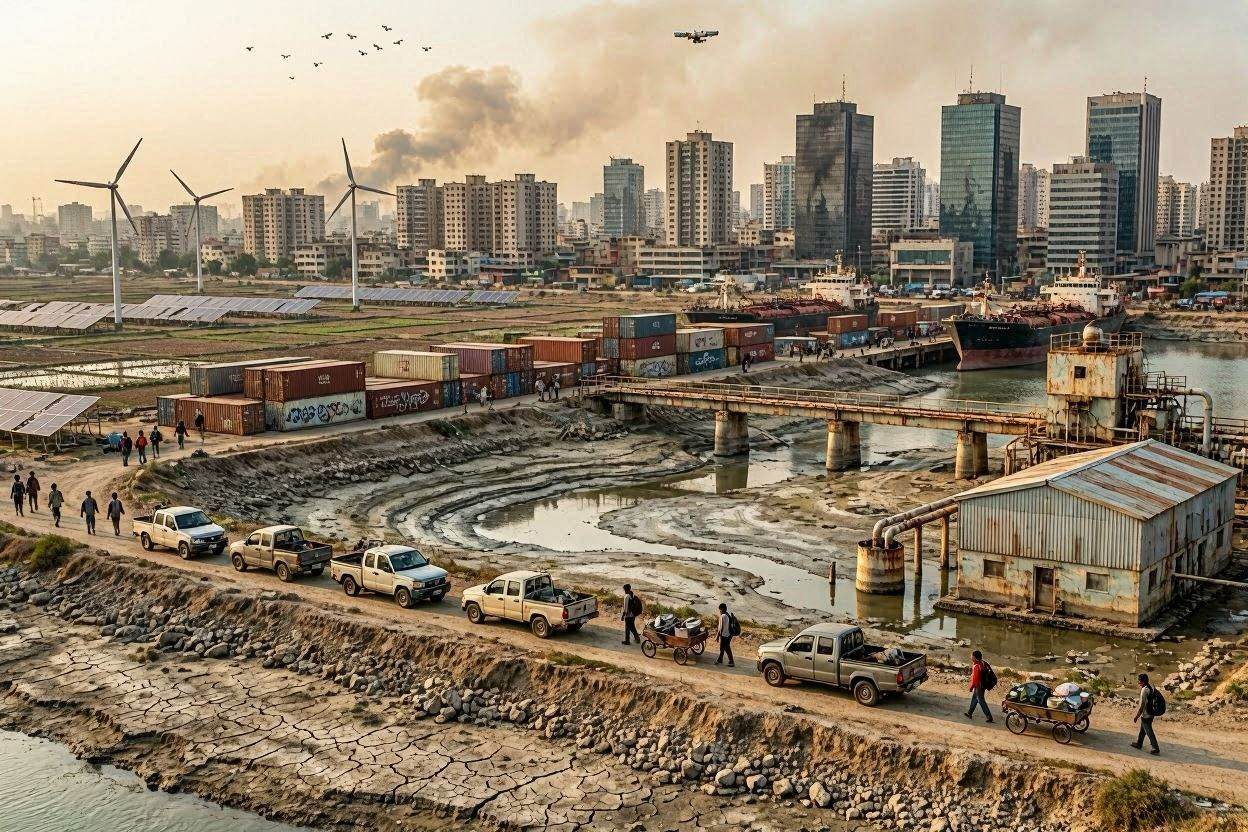
Problem: Competition for energy, minerals, land, and strategic resources threatens stability and future growth.
Root Cause: Overconsumption, inefficient use, unequal access, geopolitical competition, and short-term planning.
Strategic Response: Promote resource efficiency, circular economies, diversified supply chains, and long-term planning.
KPIs: Resource efficiency, circularity rate, energy diversification, strategic reserve strength, sustainability score.
0–12 Months: Resource risk assessment and supply chain mapping
1–3 Years: Efficiency upgrades and alternative sourcing
3–10 Years: Circular, resilient, and future-ready resource systems
A. Diagnose
Identify the real problem, not only the visible symptom.
B. Design
Create a strategy with defined objectives, owners, and measurable outcomes.
C. Deploy
Convert strategy into programs, pilots, partnerships, and operational systems.
D. Measure
Track delivery using KPIs, audits, dashboards, and field feedback.
E. Improve
Refine continuously through evidence, correction, and scale-up.
Phase 1: Stability
Peace, governance, public trust, security
Phase 2: Survival
Food, water, health, shelter
Phase 3: Prosperity
Economic growth, jobs, trade, innovation
Phase 4: Resilience
Climate adaptation, digital safety, resource security, long-term systems